(ThyBlackMan.com) I wrote a column a couple of years ago regarding a “sermon” in Germany that had been created and delivered by ChatGPT. As a devout Christian, the notion that an AI-generated homily could quite literally be taken as the Gospel is deeply troubling to me. I wrote in part:
“You can’t simply upload words or thought experiments into an algorithm and receive something that is divinely inspired in return — even if those words originate from the most widely read book in history. It is an ill-advised proposition to expect soulless technology to deliver spiritual sustenance. Likewise, you can’t download the Holy Spirit from a ‘machine ’… Attempting to do so is consonant with the highly disturbing trend of supplanting worship with entertainment.”
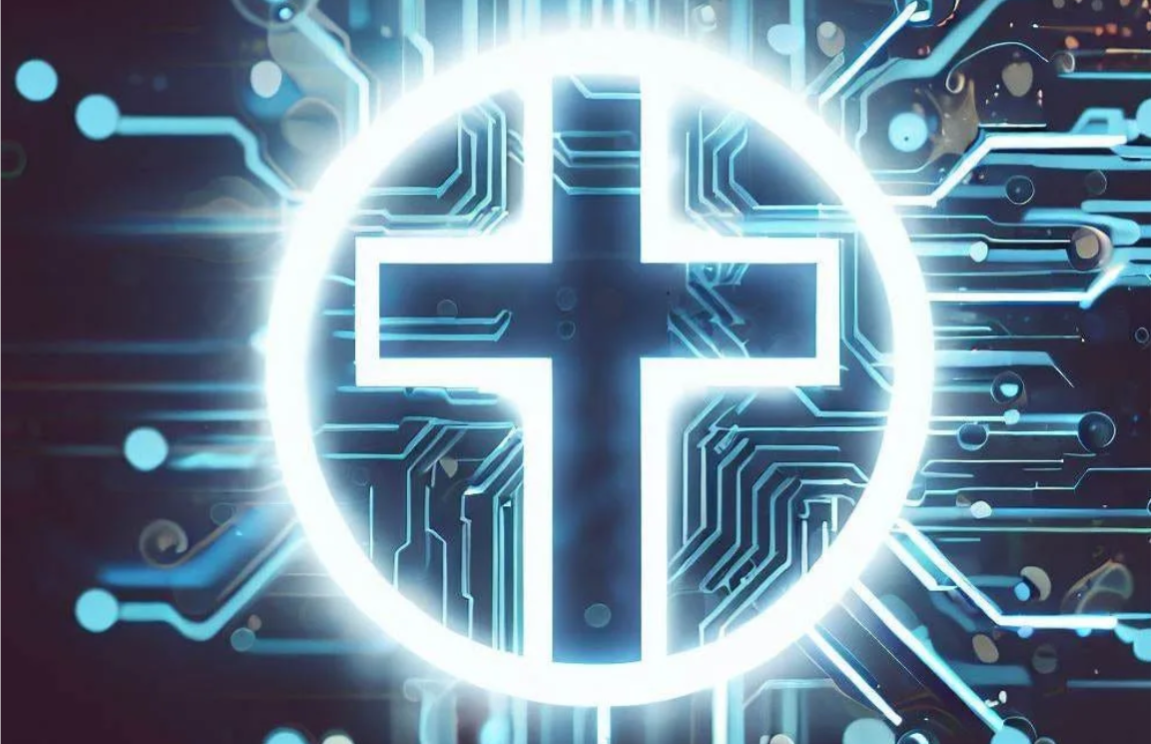
I had the same reaction when I read that scientists at Japan’s Kyoto University have developed a so-called “Protestant Catechism-Bot.” According to The Japan Times, the scientists view the bot as “a starting point for future Christian AI creation.”
In addition to the New Testament, the researchers employed theologian Martin Luther’s “Small Catechism” and the “Westminster Shorter Catechism” as learning data for the bot. They are considering more sources for future data, including the “Catechism of the Catholic Church” and the “Augsburg Confession.”
The project continues collaborations between Professor Seiji Kumagai of the Institute for the Future of Human Society and Toshikazu Furuya, CEO of a company called Teraverse. Professor Kumagai is project leader for the Christian bot. Teraverse has previously worked on Buddhist AI chatbots and Augmented Reality.
When a user poses a question to the Protestant bot, it reviews text from its source materials and decides which passages are most relevant. The bot then offers an answer or an explanation using OpenAI’s LLMs. In addition to religious queries, the bot offers answers to general questions of life.
Of course, this technology raises serious concerns. For example, it appears that the researchers have not consulted pastors or theologians, who could provide nuance, context and spiritual guidance. Also, the phrase “future Christian AI creation” is problematic. Does it mean that the bot could generate new “scriptures”?
Further, AI’s well-known tendency to “hallucinate” (i.e., create false answers) is especially troublesome. This is something that Professor Kumagai himself addresses in the Japan Times article: “There is a risk that AI could generate incorrect teachings — i.e., a hallucination, leading to misunderstandings among users. This also carries the risk of undermining religious faith. Individuals with low Christian literacy using it alone may be unable to prevent such risks, so it is better to use it under the guidance of experts such as pastors or priests,” he said.
It is instructive to point out that the scientists’ first bot was designed to address questions regarding Buddhism. This is understandable given that the technology is based in Japan, whose population is roughly 47% Buddhist.
However, Buddhism is not a religion in the way that, say, Judaism, Christianity, Islam and Hinduism are. For example, there is no creator god in Buddhism, and certainly no concept that approaches the notion of God as described in the Bible, the Koran or the Vedas.
Also, Buddhism is centered around a man, Siddhartha Gautma (the Buddha), who never claimed to be God or even divine. In fact, Buddha himself was skeptical of religion and taught that the “god-idea” is largely a response to fear.
I don’t raise these points to be critical of Buddhism; I raise them to highlight the contrast between a philosophy or belief system that is human-centered (i.e., Buddhism) as opposed to religions that are God-centered (e.g., Christianity). It is not unreasonable for a chatbot to add to Buddhist teachings because it could logically build on Buddhism’s human-based tenets. By contrast, it would be heretical or even blasphemous to add “new” scriptures to the Abrahamic religions.
The vast majority of religious Jews reject the New Testament for the same reason that the vast majority of Christians reject the Koran; Jews and Christians (and Muslims) consider their religious canons to be complete. The Apostle Paul states that “all scripture is God-breathed.” Thus, the Protestant Catechism-Bot risks reducing the Christian faith to an algorithm that is, by definition, devoid of the Holy Spirit.
Most importantly, if the bot gets something completely wrong, especially the nature of salvation, there could be eternal implications for those who are led astray. Suppose, for example, the bot suggests that Jesus Christ is merely a “spiritual guide” as opposed to the Savior of the world. While non-believers would not consider that to be a big deal, the vast majority of Christians would strongly disagree.
Believers in Christ are already battling the heresy of Christian Nationalism, the distortions of the “Prosperity Gospel”, and other challenges that bastardize our faith. Adding a “Christian” bot to this toxic mix will only serve to further confuse seekers of truth.
Written by Larry Smith
