
(ThyBlackMan.com) This season, men are choosing dress shirts with a cleaner fit through the chest and sleeves while keeping room for movement. The preferred shape sits closer to the body than a traditional shirt without pulling across the buttons or waist.
Fabric stretch, collar proportion, and accurate measurements now matter as much as color. This balance works for office days, dinners, and formal events. The next sections explain why this fit leads to current dress-shirt choices.
Why the Closer Fit is Winning
Men comparing dress shirts should start with the shoulder seam, because its position shapes the fit through the chest and upper arm. A useful range of men’s dress shirts in Canada includes stretch styles, long-sleeve options, and colors suited to professional or evening clothing. The collection includes white, black, navy, blue, dark gray, green, and white denim.
A closer cut removes excess fabric around the torso. The shirt should follow the body without clinging, especially beneath a jacket or sweater. This shape creates a polished line while leaving enough room for normal movement.
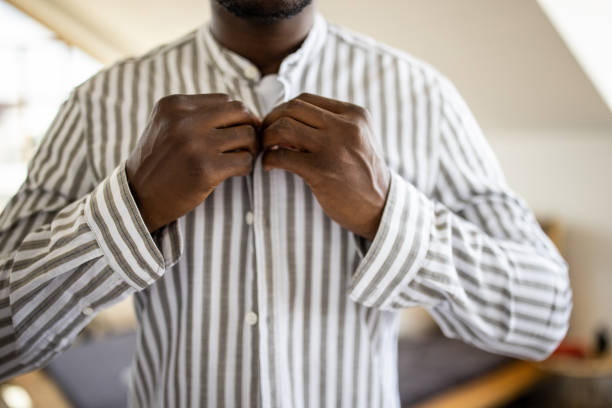
What a Proper Fit Looks Like
The shoulder seam should meet the point where the shoulder naturally ends. A seam that sits beyond that point creates sagging fabric, while one positioned inward restricts arm movement.
The collar should sit comfortably against the neck with the top button fastened. A small amount of space allows comfort without leaving a visibly loose gap. Collar size also affects how a tie sits and how the shirt frames the face.
The chest should maintain a smooth line across the buttons. Pulling, rippling, or gaping indicates that the shirt is too narrow. Excess fabric beneath the arms signals that the cut is too generous.
The sleeve should reach the wrist bone when the arm hangs naturally. Under a jacket, about half an inch of cuff should remain visible. That proportion keeps the outfit balanced without making the sleeves look short.
Why Stretch Fabric Matters
Stretch fabric is a practical choice for men who wear dress shirts through long workdays. A small amount of elasticity lets the shirt move with the shoulders, arms, and torso instead of creating tension across the seams.
This detail is especially important in a closer cut. A rigid shirt needs more room for comfort, while stretch construction supports a neater shape without restricting mobility. It also helps the shirt recover after sitting, driving, or reaching across a desk.
The collection includes several 360-degree stretch shirts and long-sleeve stretch styles. Those details show a clear focus on movement within a closer dress-shirt shape.
Choosing Color for More Wear
White remains a dependable choice for suits, business clothing, and formal occasions. Black creates a sharper evening look, while navy works with gray, tan, and dark trousers.
Blue provides a softer option for office clothing and smart-casual settings. Dark gray pairs easily with black or navy jackets. Green and white denim create less traditional choices for dinners or relaxed events.
Color should follow the existing wardrobe rather than lead the purchase. A shirt gets more use when it works with several pairs of trousers and at least one jacket.
How to Buy the Right Size
Accurate measurements provide a better starting point than a familiar label. The neck, chest, sleeve, and shoulder should be measured while wearing a thin undershirt. Those measurements should then be compared with the size chart for each shirt.
Men should check the shirt while standing and seated. A proper fit remains comfortable across the chest when seated and keeps the hem long enough to stay tucked.
The intended use also affects the choice. A shirt worn under a suit needs a clean collar and controlled sleeve length. A shirt worn without a jacket allows more flexibility in color, texture, and cuff visibility.
Conclusion
The season’s preferred dress-shirt fit brings the torso closer to the body while leaving room through the shoulders, chest, and sleeves. Stretch fabric supports movement, and accurate collar and sleeve measurements keep the shirt polished. Color should work with clothing already in the closet. Before buying, measure the neck, chest, shoulder, and sleeve length, then test the shirt while seated. That quick check helps turn a seasonal preference into a dependable wardrobe choice.
Staff Writer; William Carter
