
(ThyBlackMan.com) The news of Cassandra Wilson’s passing gave me pause before I could find the words to write. One of the most distinctive and influential voices in American music is gone. News of her death broke today, September 2, 2026. She died at home in Jackson, the same Mississippi ground that raised her, seventy years old, with family and close friends nearby. Robert Torre, who served as her manager for twenty years, said the end came peacefully at home. Nobody has put a cause to it, and I am not going to chase one. A great singer walked on. That is the whole of what a body needs to know today.
Writing about Cassandra Wilson presents its own challenge because you cannot pin the woman down. I have covered Black music most of my grown life, and every time the word jazz came up around her it fit like a coat two sizes too small. Sure, she could swing. But then here comes Robert Johnson, sung so slow and so low you swore the man was standing in the room. Hank Williams got the same treatment, a country weeper coming out sounding like it grew from Delta mud. Joni Mitchell, the Monkees, whatever struck the mood, all of it got pulled down into that dark register and belonged to Cassandra by the time she turned it loose.
So where does a sound like that come from? You go back to the house on Albemarle Road.
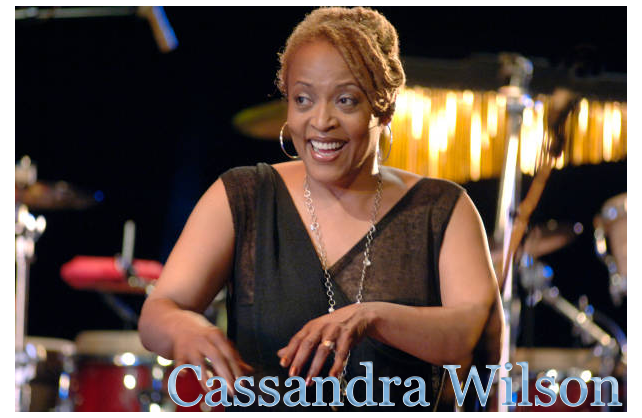
Cassandra Marie Fowlkes was born in December of 1955, last of three. Now the daddy, Herman Fowlkes Jr., that man could play. Guitar, upright bass, taught it too, and he ran with the cats on the local scene back when nobody up North was writing any of it down. Cut records with Sonny Boy Williamson II, understand. So the blues was already living in that house before the child could climb up on the piano bench. And the mama, Miss Mary, she taught school, went and got herself a doctorate later on, kept Motown going on the turntable. Think about that mix. Berry Gordy shining out of one room and a bluesman working his changes in the next.
Piano lessons started at six. Then clarinet, marching band, the whole business. By the time the teenage years hit, the drills had worn thin, so the girl went to her father asking him to teach guitar. You know what he did. Handed her a Mel Bay book and told her to go figure it out. Some folks hear that and think the man was being hard on his child. I hear somebody who knew exactly what he was doing. He wanted those fingers finding their own way, and Lord, did they. Little folk songs came pouring out after that, running behind Joni Mitchell and Joan Baez.
Church got hold of the girl too, of course it did, standing between mother and grandmother of a Sunday. Anybody raised in the Black church knows that building will teach you more about a lyric than any music school ever could.
Millsaps College was first, theater and philosophy. Then Jackson State, a mass communications degree finished up in 1979. A drummer named Alvin Fielder got in her ear and pushed toward the real jazz work, the improvising. New Orleans had the woman for a spell. Then New York City rang in 1982, and child, that is when school really started.
Up there came Steve Coleman and that M-Base crowd, the Abbey Lincoln and Betty Carter sides worn clean through, the craft of taking one line and making it mean two or three things at once. First album as a leader, Point of View, dropped in 1986. By 1988, Blue Skies had arrived, a standards date, and heads started turning. But the big one, the album that changed everything, that arrived in 1993. Blue Note signed on and out came Blue Light ‘Til Dawn.
And this right here is the part that gets me, the part a whole lot of us who came up in this part of the country carry around. Think about it. Years and years gone from home, all that New York shine worked in, and what does the woman do with it. Turned right back around toward home is what. That low, smoky thing in the singing was Mississippi through and through. You could hear the heat of a front porch in it, the hush of a little country church, the stillness of the delta after dark. New Moon Daughter arrived in 1995 and earned her first Grammy in 1997. After that the records just kept coming. A tribute to Miles on Traveling Miles in 1999. Belly of the Sun soaking in the light in 2002. Then Glamoured, then Thunderbird with T Bone Burnett at the board. Loverly arrived in 2008 and brought home a second Grammy in 2009, and years on down the line Coming Forth by Day laid a wreath at Billie Holiday’s feet. Somewhere in all that came a turn shoulder to shoulder with Wynton Marsalis on Blood on the Fields, the thing that won the man a Pulitzer.
Time magazine went and called her the best singer in America back in 2001. Took the crown, Cassandra did, and never once acted like it sat on her head.
You want to know what stays with me, though. It is the coming home. January of 2010 the Mississippi Blues Trail set down its hundredth marker and put that name on it. They planted the plaque right in front of Brinkley Middle School, across the road from the very house where a little girl used to shinny up trees. John Horhn, the man who is mayor of Jackson now, grew up on that street with her. He likes to tell about the two of them in second grade, him hollering up at the tree to come on down while the answer came back that she was headed for the top. And you know what. That is precisely where she went.
There was a thing said at that ceremony I have never let go of. Told the crowd that our music has gone out and touched the whole wide world, that the blues sits down at the bottom of pretty near everything we sing, bebop on up to rock and roll. Coming from a woman who had sung in the grandest rooms on the planet, that was no small offering. It was a thank-you to the dirt she came from.
By 2026 the honors ran about as deep as they give out. The NEA made her a Jazz Master in 2022. Colleges lined up with honorary doctorates, Millsaps and Berklee and The New School among them. Europe threw prizes, festivals gave medals, the home state pinned a Governor’s award on her chest. None of it, not one piece, changed the plain truth of the matter. A girl off Albemarle Road took the whole shape of Black Southern song and carried it to Tokyo, to Paris, to any stage on earth with a good piano waiting.
We lost a giant today. For those of us who write these things down, who came up in the same red clay, it lands like losing blood kin. What Cassandra showed a body is that you could go clear across the world and never once turn loose of where you started. Every young artist stuck in some little Southern town, wondering if anybody out there is ever going to listen, ought to sit a while with all of that.
Rest easy now, Cassandra. The marker is still standing across from the schoolyard. The records are still turning down here where summer never lets up. You took the sound of Mississippi farther than any of us had a right to hope. May you rest in peace.
