
(ThyBlackMan.com) There is a particular kind of foolishness that only pride can buy. Duane Davis, the man the streets came to know as Keffe D, spent close to two decades telling anybody with a microphone or a publishing deal exactly how Tupac Shakur died. He talked to police. He talked to television cameras. He put his name on a memoir. And on Monday, in a Las Vegas courtroom, twelve people decided they had heard enough of his own voice to find him guilty of murder.
The jury convicted the 63-year-old of first-degree murder with the use of a deadly weapon in the September 1996 drive-by shooting that took Tupac at 25 years old. The gang enhancement portion of the charge was dismissed because of witness complications. Nobody claimed Keffe D pulled the trigger. Prosecutors never even tried to sell that. What they argued instead was that he was the shot caller, the man who supplied the pistol and pointed his people toward a target. Under Nevada law, that participation is enough. His hand did not have to be on the gun for his name to end up on the verdict.
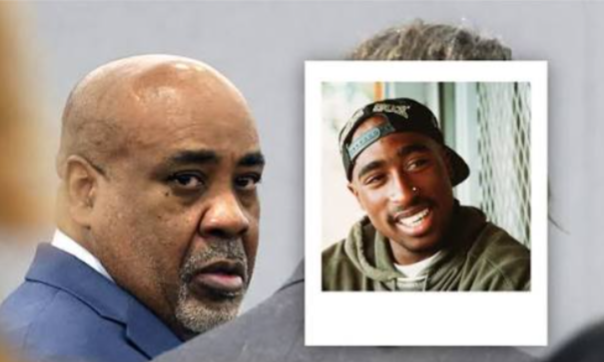
Sit with the irony of it, because it runs deep. For years this man believed that time was his friend. Witnesses died off. Memories faded. The other men said to be in that white Cadillac, his nephew Orlando Anderson among them, went to their own graves without ever facing a courtroom. Keffe D looked at all that empty space and figured he could fill it with whatever version made him look biggest. He mistook survival for immunity. He thought outliving everybody meant outrunning everything.
The core of the state’s case rested on the one thing he could not stop doing, which was running his mouth. Back in 2008, he sat down with federal task force investigators under a confidential proffer agreement. That agreement was not the blanket immunity he appeared to imagine. The state later obtained federal permission to use the recording, and the judge allowed it into evidence after prosecutors argued that his public accounts opened the door. He went on a BET docuseries in 2018, after being diagnosed with cancer, saying he had nothing left to lose. He coauthored a 2019 memoir called Compton Street Legend that reads almost like a confession dressed up as a bragging session. In it, the shooting gets narrated play by play, right down to the line about how the time for talking had passed.
Jurors heard about eight hours of his recordings. They read passages from his book. A former Compton gang detective explained that a man of Keffe D’s rank had to give the word before any younger member squeezed a trigger in his presence. The picture the prosecution painted did not depend on DNA, fingerprints, a recovered weapon or testimony from another occupant of the Cadillac. It required a man who could not resist the sound of his own legend, and Keffe D had spent half his life supplying exactly that.
His defense tried one of the few moves left. They argued the book was written for money, that the coauthor inflated the drama to move copies, and that nobody could separate which words belonged to Davis from those supplied by the writer. Keffe D himself claimed in televised interviews before the trial that he never even read the book. He said he only handed over details of his life and let somebody else spin them into a story. That is a hard sell to a jury when your name sits right there on the cover and your voice sits right there on the tapes. Deliberations lasted less than three hours. Davis now faces a possible life sentence, with the judge expected to determine his punishment at a later hearing.
Now here is where I want to talk to the young brothers, and the not so young ones too, because there is a lesson buried in this that is bigger than one man in Las Vegas.
Some of us escape the worst moment of our lives and then spend years crawling back toward it because the crowd wants to hear about it. There is money in the old story. There is attention in the old scar. A man can go decades clean, quiet, out of the game, and still get pulled back under by the need to be seen as somebody who mattered when things were dangerous. That pull is real. It sells podcasts and books and docuseries. It fills rooms. And it will bury you.
Street history is not entertainment, no matter how many platforms treat it like a genre. When you turn a killing into content, you are not just performing. You are testifying. The line between telling your story and building the case against yourself is thinner than any of us want to admit, and Keffe D walked all the way across it while people applauded. He got his checks. He got his notoriety. He got the reputation he seemed to crave. Then the same words that made him a legend in one world made him a defendant in another.
I think about Tupac’s family in that courtroom, his sister Sekyiwa crying as the verdict came down. Nearly thirty years they carried this. Nearly thirty years of theories in barbershops and unsolved case specials, of watching a man walk free while he narrated their brother’s death for profit. Whatever anybody thinks about the case, there is something to the idea that a family finally got to hear the word guilty read out loud after all that silence.
For Keffe D, though, the tragedy is the shape of his own making. He was not caught by a snitch, a wiretap or a rival. He was caught by himself, by the version of himself he could not stop selling. A quieter man might be enjoying his grandkids’ ball games right now, exactly like he said he wanted. Instead he sits in a cell awaiting a sentence that could run to the end of his days, undone by the story he loved too much to leave alone.
There is old wisdom in that. Some doors are meant to close behind you. When you keep going back to open them for a crowd, do not be surprised when one of them turns out to be a cell. Keffe D talked his way into history, and then he talked his way straight into prison. The applause was never worth the walls.
