
(ThyBlackMan.com) Many Black Americans would argue that it is nearly impossible to go through a week without encountering someone from the Black community posing the question, ‘What happened to the Black Church?’ People often reflect on what happened to the Black Church, which was once a vibrant and cherished part of the Black community, valued by believers and non-believers alike. You’ll see this conversation on social media, within faith communities, and in everyday chats, showing how deeply it resonates with many of us. Across generations, perspectives vary: Baby Boomers see the Black Church as having lost its way after abandoning the traditions of previous generations. Generation X views it as struggling due to a decline in influence and prestige. Millennials feel it’s in serious trouble, almost on life support, because its views and practices no longer connect with their lives. And Generation Z often sees the Black Church as gone, irrelevant, or extinct because it seems like it hasn’t made a positive impact on their lives or communities from their point of view. Despite all the different diagnoses from various people across generations, the question of what truly happened to the Black Church remains unanswered. Interestingly, some in the Black community have shifted from asking ‘What happened to the Black church?’ to exploring ‘What is happening now in the Black church?’
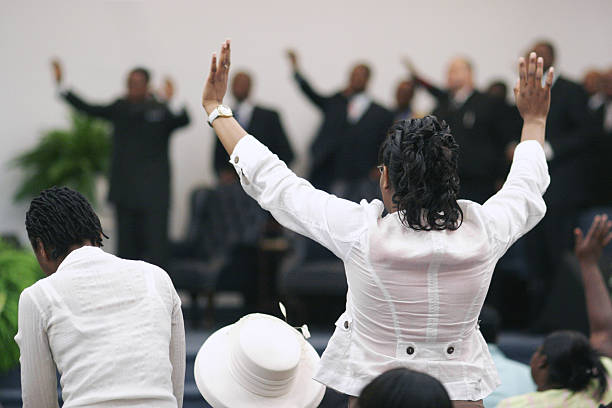
1 Corinthians 12:27 states (NIV): “Now you are the body of Christ, and each one of you is a part of it”. As believers and disciples of Jesus, in the body of Christ, we know that we are all sons and daughters of God our creator, and in him that is no color. Galatians 3:28 states (NIV): “There is neither Jew nor Gentile, neither slave nor free, nor is there male and female, for you are all one in Christ Jesus. If we are all one according to the scriptures, it’s worth considering how and why the Black Church developed. The Black Church in the United States has its roots as a heartfelt response to the struggles of slavery, racism, and being excluded from predominantly white churches. It grew as a space of hope, resilience, and community for many.
The Black church offered a platform for personal development, growth, independence, spiritual autonomy, and the opportunity to attain a significant identity, enabling individuals to think independently and not perceive themselves as second-class citizens, despite the perceptions held by other racial groups. We must also remember that the Black Church offered safety and protection in spiritual, physical, and intellectual domains.
When the Black community asks, “What has happened to the Black Church?” it’s a gentle call for us all to look inward and reflect on how we’ve been affected—both personally and together. Since Scripture reminds us that we are the church, as believers, we should take responsibility for its current state and consider why many in our community view it as less vital or even discouraging. Have we come to believe, after witnessing the election of a Black president, that we live in a post-racial society and that the Black church might no longer be needed? Have our sisters grown so spiritually minded that they might now see religion and the scriptures as less important in their lives? Are we so confident in our education and credentials that faith sometimes feels less important unless supported by data and facts? Could it be that the training, safety, and support we once treasured from the Black church now seem outdated because we doubt whether our Black preachers are truly ready to lead, teach, and guide us? Maybe some pastors have shifted their focus toward fame and wealth, prioritizing personal success over genuinely caring for our spiritual needs. Perhaps we’ve become distracted by the glitz, entertainment, and size of our churches, losing sight of our true mission to uplift and empower our communities. It’s worth asking if we’ve become too narrow in our focus, only looking after ourselves and forgetting the importance of caring for our neighbors. Have we fallen into the trap of hearing only messages about prosperity, allowing our ears to become dull to words about repentance, suffering, and self-denial?
Are our pastors focusing more on members being in the right offering line than genuinely caring for God’s people? Have we bought into the idea that every young Black male is a YN and a threat, instead of seeing them as sons? Have we stopped seeing our brothers as brothers and instead view them as burdens that are too heavy to carry? Let’s remember that God calls us to look out for widows, to provide for our children, and to love our wives as Christ loved the church. If the Black church is struggling, it’s because we as a people are struggling. If the Black church doesn’t seem to have all the answers, it’s because we, ourselves, are searching for answers too.
If the Black Church is to truly regain its important role and impact in the world and within the body of Christ, we all need to embrace our rightful places—whether in our homes, with our families, in our communities, or at our workplaces. It’s important to walk faithfully in our own unique paths with God and live out our daily lives with purpose. Even the brightest lights can sometimes dim or burn out, making it hard for us to see what’s important. But we’re grateful to serve a God who knows exactly how to recharge, renew, and revitalize us, so we can continue to let our little lights shine brightly. The next time someone asks what transpired with the Black Church, please respond by asking, “What happened to you?”
Staff Writer; Jamie Seals
May also connect with this brother on Twitter; mychocolatemind.
Also drop an email at; JSeals@ThyBlackMan.com.
