(ThyBlackMan.com) The spirit behind the Voting Rights Act of 1965 was to firmly free the nation of systemic racial discrimination by ensuring that a citizen’s vote actually mattered—a concept known as meaningful representation. Meaningful representation means people are not just allowed to vote, but they have a fair opportunity to elect candidates who will genuinely respond to the needs of their community. At one time, Congress and the courts recognized that letting Black citizens vote was meaningless if lines were drawn to dilute their collective voice. We can’t forget that the strategies behind voter suppression and vote dilution are not the same.
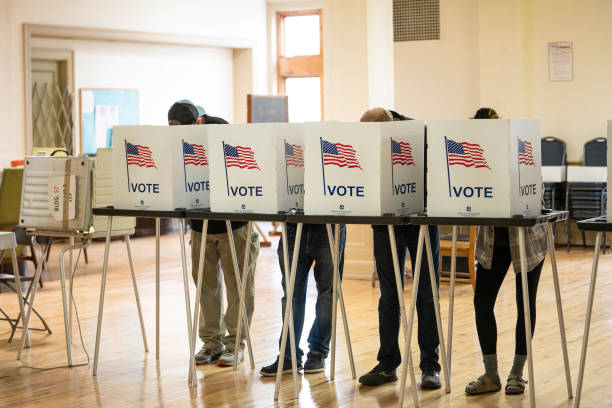
While they both harm democratic representation, they do so at different stages of the process. Voter suppression places barriers that make it harder to vote or prevent voting altogether. Vote dilution weakens the power of votes. It happens when an election system, district map, or policy lets people cast ballots but denies a group an equal opportunity to elect the type of candidate that would be supportive of their true concerns and needs. The vote is counted, but it has less practical impact because the system spreads, packs, or otherwise weakens the community’s political power. In other words, voter suppression targets whether you can vote, while vote dilution targets how much your vote matters once you do vote. A suppressed voter may never get to the ballot box; a diluted voter gets there, but their community still may not have fair electoral power.
In a newly released framework, U.S. Sen. Raphael Warnock is calling for Congress to investigate whether states that redrew congressional districts after the Supreme Court’s Louisiana v. Callais decision illegally discriminated against Black voters. Warnock argues the decision has opened the door for lawmakers in several Southern states to redraw congressional maps in ways that weaken the political influence of Black communities. “Across the Deep South, partisan actors have manipulated their maps to silence the voices of Black voters,” Warnock said in a statement announcing the proposal. “Even this Supreme Court has made it clear that intentional racial discrimination remains illegal. We owe it to voters to root out whether any illegal actions or discrimination occurred.” The senator tied the health of American democracy to broader economic concerns, arguing that issues such as affordability and wealth inequality cannot be fully addressed without stronger protections for voting rights. I believe that those who are elected to represent majority-Black districts are more likely to be defenders for the poor and oppressed not only in Black communities, but all communities regardless of race.
Democratic U.S. Rep. Cleo Fields, representing the 6th congressional district, has been a longtime fixture in Louisiana politics. Rep. Fields served two stints in Congress: one from 1993 to 1997, and another since 2025. It was Rep. Fields’ district that was the center of the U.S. Supreme Court’s Louisiana v. Callais ruling. The Supreme Court ruled that a previous state map with two majority-Black districts was an “unconstitutional racial gerrymander.” As a result, Fields’s majority-Black congressional district was redrawn by the state legislature to favor Republicans in November’s midterm elections. Rep. Fields announced he will retire and not seek reelection to his redrawn congressional district. While the Supreme Court’s decision and the subsequent loss of a majority-Black district may be perceived as a victory for Republicans in their attempt to maintain control of the House, Rep. Fields’ retirement is a major loss for Trump’s MAGA supporters in Louisiana.
A typical MAGA supporter in Louisiana is most likely white, older, Christian, and without a four-year college degree. They tend to live in rural or small-town areas rather than metropolitan areas. The truth of the matter is that a large number of MAGA supporters living in Louisiana are poor because Louisiana itself has one of the highest poverty rates in the nation. Many MAGA residents live in distressed areas where economic decline has left many white families with low wages, unstable work, and having to rely on Medicaid, SNAP, housing aid, and other public support to make ends meet. Despite their personal poverty and the poverty of their families, they support Republican lawmakers who have anti-poverty agendas. They applaud the ruling of the Supreme Court. They applaud the elimination of Louisiana’s second majority-Black district. They applaud the retirement of Cleo Fields and the fact that the Congressional Black Caucus (CBC) has one less member. For many of these MAGA residents and voters, poverty is a form of social oppression that they have succumbed to. Racism is a form of social oppression they continue to perpetuate and promote.
Rep. Cleo Fields, like other men and women of the CBC, represents communities where degrees of urban and rural poverty exist. Poverty is not limited by race or geography. Where members of the CBC have taken stands to defend the economically oppressed in Black communities, by default they are also fighting for the poverty-stricken residents in white areas. MAGA supporters throughout Louisiana benefited when Rep. Fields supported anti-poverty programs. Despite Rep. Fields being Black and a Democrat, he gave white MAGA supporters “meaningful representation” as he responded to the needs of impoverished individuals and families living in all districts in Louisiana. His retirement means there is one less voice and one less moral vote supporting white struggling communities.
Written by David W. Marshall
Official website; https://davidwmarshallauthor.com/
One may purchase his book, which is titled;
