(ThyBlackMan.com) My grandmother kept receipts. Not only the paper kind, though a shoebox of those sat beneath her bed. The ones that counted she kept in memory, in the long private ledger a person compiles after a lifetime of learning whether the world means to deal fairly. The grocer who leaned a thumb onto the scale. The teller who waved her cousin from the loan desk while smiling the whole time. In a body like mine, you understand early that recollection is not sentiment. It is a form of self-defense, passed down like any inheritance worth keeping.
That inheritance comes to mind whenever someone asks whether Black America will let bygones be bygones with the large retailer headquartered in Minneapolis. The question rests on an old and flattering assumption, that Black consumers forget quickly, that loyalty can be revoked and later repurchased at a discount. The record suggests otherwise. I have followed this kind of story long enough to know how its final chapter tends to read.
Consider the sequence. A corporation spent years assuring its Black customers that it understood them. It made the pledges, hung the language of belonging and equity on the wall, and collected every ounce of goodwill that language earned. Then the political wind shifted, a new administration arrived, and almost overnight the same firm decided those commitments had grown too heavy to carry. The reporting left little doubt about the timing. Early in 2025, the moment principle carried a price, the retailer sat down.
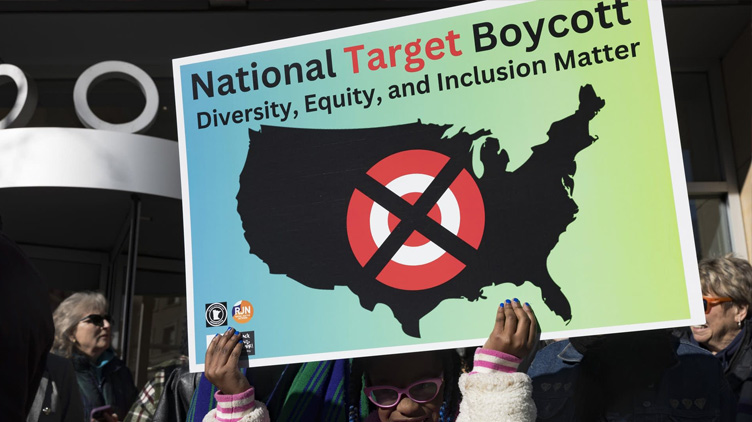
The response was disciplined. Shoppers marched. Clergy fasted. Organizers gathered outside the headquarters and named precisely what they had watched unfold. Then the numbers moved, which remains the only language certain boardrooms respect. Foot traffic thinned. By late 2025, the stock had surrendered roughly a third of its value from the rollback period. A chief executive entered a transition, leaving the CEO role while remaining executive chair. None of it came from a hashtag. It came from ordinary people, one cart at a time, choosing to spend their dollars somewhere else.
And then came the part that stings.
Someone inside that building grew clever, or believed they had. The strategy assumed the road back into those wallets ran straight through the music. So the chain reached for a giant. Shawn Carter, the man out of the Marcy projects, agreed to let his debut album return as a polished anniversary pressing sold beneath that red circle. White vinyl, collector’s packaging, the release timed close to Juneteenth so the message could not be missed. Welcome home, the gesture seemed to say. All is forgiven. Come and spend.
I have admired that man’s mind for thirty years. I bought Reasonable Doubt when it was new, and the corner spoke through every bar. Yet admiration is not obedience, and a great record cannot launder a corporate retreat. Some of us remember an earlier season, when a young quarterback filed a collusion grievance after kneeling and saying the football league had shut him out, and that same mogul stepped forward with a partnership and urged everyone to move past protest toward what he termed progress. The progress, as far as anyone could tell, amounted to a wealthier Roc Nation and a handful of diverse faces at the halftime show. The young quarterback never threw another professional pass.
That is the pattern. I am not the first to notice it, and I will not pretend to read another man’s heart. But I can read a calendar. When the pressure on an institution runs highest, that is the precise moment the deal materializes, and the deal tends to enrich the dealer most of all.
Boycotts run deep in our tradition. The word sits easy because earlier generations made it work when everything was at stake. Workers walked to their jobs in Montgomery for more than a year rather than ride in the back, and they did not relent because the city printed a friendlier notice. They relented when the law itself was forced to bend. Farmworkers out west held their line for years until the wages finally rose. That lesson passed down like a family recipe. A fast does not end because someone offers a snack. It ends when the thing being protested gives way.
People keep asking why the line still holds more than a year on, so permit me to state it plainly. This was never about a retired slogan. Long before the rollback, the chain had built its public face on welcoming Black shoppers, sponsoring the galas, printing its name across the programs at community events. After George Floyd was killed in 2020, the company made genuine vows. A racial equity plan. A commitment to raise Black representation in its workforce by a fifth. Donations directed toward historically Black colleges. And the headline pledge: more than two billion dollars to be spent with Black owned businesses by the close of 2025, purchasing the goods that fill the shelves, contracting the agencies and vendors and media firms, channeling real buying power into a community long shut out of it. Not a charitable donation. A promise to conduct serious commerce at scale. The word was accepted as given. Some felt pride, even, watching a hometown brand appear to do right by its neighbors.
Then a new president took office vowing to dismantle DEI programs, and within a week the entire posture collapsed. The speed told the story. An institution that requires only seven days to abandon a principle never truly held it. Organizers grasped the larger stakes at once. If a giant so loud about inclusion could fold that quickly and pay no price, every boardroom in the country would read the outcome as permission. Drop the promises. The memory will fade. No one keeps the bill.
Here lies the splinter no one in that building wishes to remove. The outgoing chief executive wrote last summer that the two billion in promised spending would be met by year’s end. Target later said the pledge had been fulfilled in early 2026, but critics still had not seen the kind of detailed public accounting they believed the community was owed. Even the minister who later tried to declare the fight finished conceded he had seen nothing confirming the money moved. So the request now is to forgive a debt that has not been publicly itemized to the satisfaction of those who were asked to trust the promise. My elders had a rule for exactly this. You do not mark a bill cleared on the word of the man who still owes you a receipt.
That is what holding the line looks like up close. We are well into 2026 now, more than a year past the first betrayal, seventeen months and counting, with no central authority issuing orders, only households across the country arriving at the same decision in their own kitchens. One organizer put it more sharply than I could, declining to trade the community for crumbs or a seat at a corrupt table.
What the strategists in those marketing meetings keep getting wrong, generation after generation, is elementary. They treat sentiment as inventory, as though trust were a mood restored by the right celebrity and the right rollout. Trust is not a mood. It is a contract. Once broken, no jingle, no exclusive, no famous friend signs it back into being. Only conduct does that. Restore the hiring commitments. Resume the spending with Black owned firms without waiting to be shamed into it. Stand with the immigrant families being torn apart in nearby neighborhoods. Perform the unglamorous, expensive, sustained work that earns no applause. That is the only receipt worth accepting.
What these strategists underestimate most is straightforward. They keep treating forgetting as a certainty, a line of credit to draw against, and they have done so for a hundred years. The assumption is always that the next campaign will arrive before the last betrayal hardens, that the public holds the attention span of a quarterly report. They are mistaken, every time. The proof rests in the simple fact that they must keep trying. No new strategy is required to recover people who never left.
Let me be fair, because fairness is its own form of memory. Good souls will buy that record and feel no shame, and I understand them completely. A collector wants the pressing. A devoted listener wants to honor thirty years of a classic. A person can refuse an injustice and still love a song. I will not stand over anyone’s cart counting their groceries. Each household keeps its own ledger.
But let no one persuade you the matter is settled because a single pastor announced his fast complete. Those who began this never surrendered the ending to one voice. The chain restored a fragment here, a pledge there, a portion of what it once promised, and called the result peace. Partial repair is not repair. It is an admission that something broke, then papered over with a gesture sized for a press release rather than a remedy.
My grandmother had a phrase for that kind of offering. She called it being handed a bone and told it was a feast. She never ate it, and she taught her children to refuse it as well.
So no, I do not believe this community is fooled the same way twice. Once, perhaps. A first betrayal can catch even a careful person unaware. But Black America learned long ago to watch the timing, to notice who appears when the cameras are hot and who quietly does right when no one is filming. Our own history is crowded with demands to forgive on command, to set down a fresh injury the very moment it became inconvenient for someone else. That arrangement wore thin generations ago, and weariness has a way of sharpening the eyes.
What I return to is this. That store did not lose its Black customers by failing to entertain them. It lost them by revealing who it was the moment the cost turned real, and they believed what they saw. That is not bitterness. It is literacy. A people who survived everything this country has thrown at them did not endure by remaining naive about who keeps their word and who discards it the instant honoring it grows costly.
If the retailer genuinely wants those shoppers back, the path is not a vinyl record, however beautiful the object. Real repair is slow and unrewarding. Honor the original promises. Mean them this time. Then mean them again next year, when the political weather turns cold and meaning them becomes unpopular. Sustain that across a stretch of seasons, and watch how a people who never forget a wound prove equally incapable of forgetting a kindness.
Until that day arrives, the music will play and the carts will roll past the bullseye. Somewhere an older man will hum along to a record he has cherished since long before its maker became a billionaire, his money resting quietly in his pocket. He can love the song and still remember the seller. The two were never the same thing.
The receipts remain where they have always been kept, in memory, and they do not fade on anyone’s schedule. A company that mistakes patience for forgetting has misread the very customers it hopes to keep. That has long been the costliest miscalculation in American commerce, and somehow it is the one corporations cannot stop repeating.
Staff Writer; L.L. McKenna
Politics explained through the lens of justice and equity. Offering perspective that informs, challenges, and empowers.
One can contact this brother at; LLMcKenna@ThyBlackMan.com.
