
(ThyBlackMan.com) There are two sports analogies we can use to exemplify the need for intergenerational unity within the Black community. The “next man up” mentality is a sports-driven philosophy emphasizing preparedness, resilience, and adaptability, where teammates are ready to step in and perform at a high level when a starter is injured or unavailable. It focuses on maintaining team performance without excuses, ensuring no significant drop-off in production.
Every player – man or woman – regardless of their position on the depth chart, must prepare as if they are the starter. There is a redundancy in leadership that ensures the team continues to function by building personal responsibility and team loyalty across the roster. Coaches and players are required to quickly adjust strategies and player responsibilities on the fly without prior warning. The second sports phrase that is often used is “passing the baton.” Using the example of a relay race, handing over a particular duty or responsibility is denoted. It is necessary for the intergenerational transfer of leadership. Just as in a relay race, a fumbling or dropping of the baton may trigger the demise of the team. “Passing the baton” means there are periods of shared leadership between the one passing the baton and the one receiving the baton.
Before Dr. Martin Luther King Jr. became the changemaker and preeminent leader of the civil rights movement, there was Martin Luther King Sr., commonly known as Daddy King. Martin Luther King Sr. was a respected Baptist minister, civil rights and NAACP leader, and a change-making advocate for justice in the South in his own right. Eventually, the father and son became co-pastors, signifying the shared vision and leadership that comes with the intergenerational “passing of the baton.”
Daddy King was a social gospel advocate who passed on to his children the teaching of Christ mixed with social advocacy and activism. At home, Daddy King taught his children to be the model of integrity and Christian character. He prepared them for an increasingly discriminatory society by developing in them a strong sense of moral- and ethical-driven justice. As the next generation, he taught them resilience and to respond with dignity when faced with discrimination. He reinforced in them the principle that one should never feel inferior or accept second-class status. Martin Luther King Jr. took what he learned at home to the community and then inspired a nation.
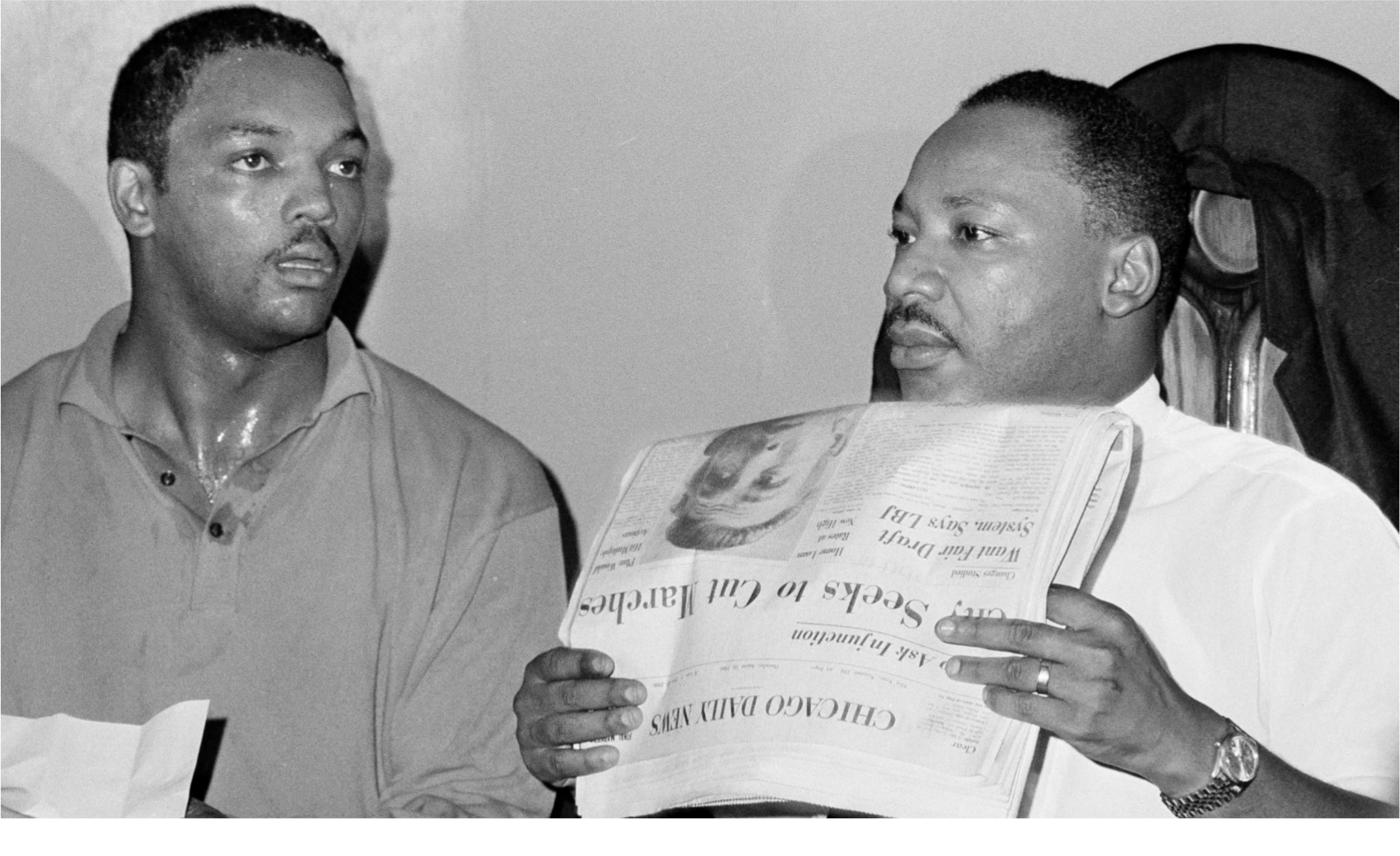
With memorial events scheduled to honor the life and legacy of Jesse Jackson, several states have lowered or will lower their flags to half-staff in honor of the deceased civil rights icon. His death closes another chapter in the civil rights movement of the 1960s. Ralph Abernathy, Andrew Young, Stanley Levison, Clarence Jones, Dr. Dorothy Cotton, Bernard Lafayette, James Lawson, along with Jesse Jackson, made up Dr. Martin Luther King’s inner circle of close and trusted advisors. Dr. King’s team was strategic, organized, and most were ordained ministers. As a result of Dr. King’s sudden death, there was no “passing of the baton”; rather, it created a “next man up” scenario. Some would say Jackson positioned himself as King’s successor, thereby becoming the “next man up.” He went on to launch Operation PUSH (People United to Save/Serve Humanity) in 1971, which was directly rooted in and considered a continuation of Dr. King’s economic work, and the National Rainbow Coalition years later. The two groups merged in 1996. There will never be another Martin Luther King or Jesse Jackson. As thousands gather to celebrate the life and legacy of Jackson, it’s a perfect opportunity to remember the messages from King’s inner circle as we face this new era of racism and authoritarianism.
As a member of King’s inner circle, Rev. James Lawson helped organize Black sanitation workers who went on strike in Memphis. During the marches in 1968, many workers wore signs that read “I AM A Man.” This showed they were fighting for equity, human dignity, and respect. It was a slogan that directly addressed the systemic racism that denied Black men basic respect. This slogan applies to every Black person today, male or female. When President Trump shared a racist video of Barack and Michelle Obama as apes, Daddy King taught us never to allow anyone, or anything, make us feel inferior or accept second-class status.
The slogan “I AM A Man” is a reminder to every generation that the fight for human dignity continues in 2026. Jesse Jackson, also a member of King’s inner circle, often encouraged people by saying, “I am somebody.” This short, but powerful, self-encouraging message built resilience and self-worth in those whom society deemed as unworthy due to their background and station in life. Jesse also reminded us to “keep hope alive.” This message needs to be embraced today as a means of intergenerational unity, as we witness firsthand the Black progress achieved through the struggles of those before us being systematically taken away. We are no longer in the 1950s and 60s, but in 2026, we find ourselves in the same basic fight for justice, human dignity, and respect. Younger generations must fight for their futures as men and women of color. They cannot afford to be distracted by the digital age they live in. Therefore, in this new era of authoritarianism, each one of us needs to be “next man up” and keep hope alive.
Written by David W. Marshall
Official website; https://davidwmarshallauthor.com/
One may purchase his book, which is titled;
