
(ThyBlackMan.com) With the passing of Clive Davis at 94, respect has to come first. Before we talk about records sold, artists signed, labels built, or how many voices became household names under his watch, prayers and condolences go out to his family, loved ones, friends, and all who knew him away from the public stage. The world knew the music man. His family knew the man.
Death has a way of reminding everybody that a legacy is never just professional. Somebody lost a father, grandfather, friend, mentor, and presence. The rest of us may look at his life through songs, award shows, documentaries, business deals, and the careers connected to his name, but they have to live with the empty chair. Before opinion enters the room, respect should be paid.
Once that is said, there is a larger conversation worth having. Clive Davis was one of the most important record executives America ever produced. That much is clear. For Black folks, especially those of us raised with soul, gospel, R&B, funk, blues, and hip hop moving through the house, the question gets a little deeper than awards and industry titles.
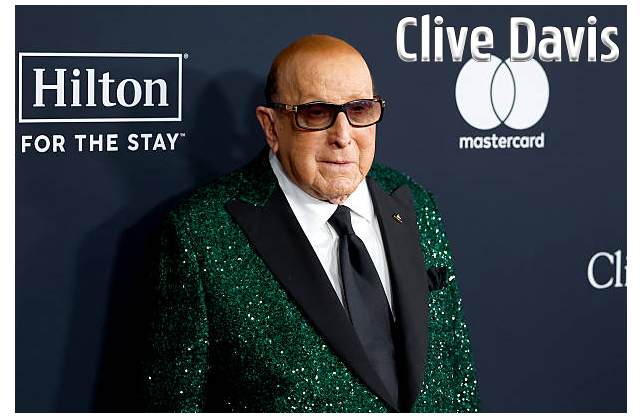
What did this man mean to Black music?
The answer is not simple, and it should not be made simple just to make him look bigger than he was. Black music did not come from a record company office. It was already holy ground long before any executive learned how to sell it. Our music came out of pain, faith, labor, joy, Saturday night, Sunday morning, front porches, church pews, cotton fields, city blocks, family kitchens, marching lines, funeral homes, and block parties. No business figure can claim that.
Still, something in the music reached his ear. Not just a good beat or a pretty voice. Plenty of executives heard Black artists and still treated them like they were only useful for one audience, one chart, one section of the store, or one type of radio station. Clive seemed to understand that our music was not a side road. It was the highway.
That is where his importance sits.
A lot of people in power have loved Black sound while disrespecting Black people. America has a long history of taking from us, copying us, watering us down, and then pretending the original source was hard to find. We have watched that happen with blues, rock and roll, soul, jazz, gospel, hip hop, and every branch that grew from those roots. Sometimes the world will dance to us before it will listen to us.
The man was still a businessman. Nobody should be confused about that. This was not some charity worker walking around saving singers from obscurity out of pure love. Labels had to be run. Deals had to be made. Sales mattered. Radio mattered. Timing mattered. Hits and stars were part of the work.
But there is a difference between using Black talent and actually believing it can stand at the center of the world. That difference is worth talking about.
Whitney Houston may be the best place to start, because her story still makes people feel something before they even finish saying her name. Greatness did not have to be handed to Whitney. That voice was already in her. Coming from Cissy Houston, church, and a musical family tree with deep roots, Whitney carried training, beauty, control, youth, and something heaven had touched.
No executive gave her that gift. What Clive did was recognize the size of it. That is not a small thing in a business where some people only notice Black talent after it has already made money for somebody else.
Looking at Whitney, the record man saw more than a strong singer. A woman with that kind of voice could cross borders. Pop radio, R&B radio, television specials, award shows, movie soundtracks, international stages, all of it sat within reach. Some people might have tried to keep her in one lane. Under his guidance, multiple roads opened, and the whole world had to deal with her talent.
That came with its own trouble. I remember the conversations around Whitney. Some Black folks felt the industry made her too polished, too clean, too acceptable for white audiences. Others defended her because Black excellence does not always have to arrive with grit on its face to be real. A Black woman singing with elegance is still Black. A Black woman standing in a gown with perfect diction and a full orchestra behind her is still carrying something from home.
That argument never fully went away, and maybe it should not. Crossover success has always asked Black artists to pay some kind of price. The world loves our gift, but it often wants to manage our image. Whitney’s career showed both sides of that blessing. Her rise reached heights few singers ever touched, but those heights came with pressure most people could not survive.
Aretha Franklin is a different part of the story. By the time Aretha Franklin came into his Arista orbit, the Queen of Soul was already royalty. That name did not need explaining in a Black household. You said Aretha, and everybody knew. That woman had already sung her way into history. Respect, pain, love, faith, womanhood, pride, and sorrow all passed through her voice with authority. Even the piano sounded like it was testifying when Aretha sat down in front of it.
What I respect about that chapter is simple. The music business did not get to treat her like yesterday’s news. This industry can be ugly toward women once they are no longer the newest face in the room. Black women catch that twice as hard. One minute the business wants their sound, the next minute it acts like age erased their value. Aretha was not done, and someone with power seemed to understand that.
There is something powerful about helping an established Black woman continue to be heard. Not discovered. Not invented. Heard. Aretha did not need a man to validate her soul. What she needed was the machinery to keep moving with her instead of moving past her. There is a difference.
Then came Alicia Keys, and the picture changed again. A young woman sitting at that piano with braids, New York in her posture, soul in her voice, and classical training in her hands did not feel manufactured. Alicia felt like somebody’s talented niece who had been practicing while the rest of the world was outside playing around.
The industry loves a pretty young singer, but Alicia was not just that. A musician sat at that piano. A writer. A young artist with seriousness in her spirit. Backing her mattered because it gave room to a Black woman who did not fit neatly into the quick package the business often wants. Instead of chasing only a hook, Alicia brought songs.
That is one thread running through his relationship with Black women in music. Whitney, Aretha, Alicia, Dionne Warwick, Jennifer Hudson, and others all had different gifts, different eras, different struggles. Their greatness did not come from him, but his ear often knew when greatness deserved a bigger stage. In a business that can be quick to reduce Black women to image, attitude, youth, or market category, that ear meant something.
LaFace takes us into another room. L.A. Reid and Babyface helped shape a whole generation of R&B, and the larger business structure around them gave that label room to move. If you were around in the 1990s, LaFace was not just a company name on the back of a CD. It was part of the sound of the decade.
TLC had style, nerve, humor, hurt, and message. Those sisters could make you dance and still make you think about self respect, relationships, AIDS, and young women trying to find their footing. Toni Braxton carried a low, rich voice that sounded like heartbreak had put on a silk dress. Usher grew into one of the great male performers of his time. OutKast changed everything for Southern hip hop.
That last one hits close for me. As a Black man from the South, I know what it meant when OutKast stepped forward and refused to sound like anybody else. Country, space age, poetic, strange, brilliant, and unapologetically Southern all lived in their music. Atlanta sounded different after them. The South became impossible to ignore.
Bad Boy was another kind of machine. Sean Combs brought flash, ambition, marketing sense, and New York confidence. The Notorious B.I.G. brought a voice and pen that still sit near the top of hip hop history. Faith Evans carried church soaked emotion into records that lived between R&B and rap. That Bad Boy sound was everywhere for a while. Cars, clubs, school dances, television, radio, barbershops, everywhere.
Nobody in a corporate office created hip hop. The Bronx did not need permission for that. Black and brown youth built the culture from turntables, rhymes, parties, walls, sidewalks, and hunger. But once hip hop was ready to become a global force, business muscle mattered too. Distribution matters. Promotion matters. Radio relationships matter. Budgets matter. The sound coming from young Black America was not a fad to laugh at. It was the future knocking hard.
That is why I say Clive Davis believed Black music could rule the world. Not because he was the source of it. The source was us. The source was our mothers singing while cooking, our fathers playing records on Saturday, our churches, our neighborhoods, our pain, our swagger, our survival, and our joy. The source was Black life.
But the man knew the world wanted what we had, even when the world did not know how to admit it. Those voices could fill stadiums. Those songs could cross oceans. Our rhythm could move people who did not understand the history behind it. A Black artist did not have to stay in a box marked “urban” or “soul” or “R&B” just to make the business comfortable.
There is a caution in all of this too. We should never confuse access with ownership. Black music has too often made other people rich while Black artists fought for control, publishing, masters, respect, and peace. That story is old, and it is still going on. Any tribute to a powerful executive has to leave room for that truth. The business has never loved us as much as the audience loved the music.
Even so, fairness requires saying that this man had an ear many executives did not have. A single was not the only thing he could hear. Sometimes a whole career came through the speakers. Sometimes the lasting power of a voice was plain to him before the rest of the industry caught up. That kind of ear feels rare now, in a time when everybody seems to chase whatever gets clipped, posted, streamed, and forgotten by next Friday.
Maybe that is one reason his passing feels like the end of an older kind of music business. Not a perfect business. Not always a fair one. But one where somebody could still sit with a song and imagine ten years, twenty years, maybe even forever.
Clive Davis leaves behind a complicated and towering legacy. For Black music, his place should be spoken of with balance. Give the artists the first honor. Always. Some were directly guided by him. Others came through the labels, partnerships, and business structures he helped build or support. Either way, Whitney Houston, Aretha Franklin, Alicia Keys, TLC, Toni Braxton, Usher, OutKast, The Notorious B.I.G., Faith Evans, and so many others carried the actual fire. They were not great because a powerful man stood nearby. The gift was real before the paperwork.
But doors were opened wide enough for more of the world to hear them.
That is worth remembering. That is worth respecting. And as his family mourns the man they loved, the rest of us can look back and say that in his long life, Clive heard something in Black music that America still tries to explain, copy, measure, and contain.
Power was there.
Beauty was there.
The world was changing.
More than once, the old record man was wise enough to get behind it.
