(ThyBlackMan.com) If the reports in your prompt are accurate, then America just got another reminder that political tension can turn dangerous in a matter of seconds. A sitting president being rushed out of a public event after a shooting scare is not just a headline. It is a warning sign about the climate of the nation, the anger in the culture, and the rising risk attached to public leadership.
When President Donald Trump entered office again, many people expected noise, conflict, lawsuits, and nonstop debate. Few expected the possibility that every major public appearance could carry the weight of real danger. Yet that is where the country stands. Whether a person loves him, dislikes him, or is simply tired of politics altogether, the office of the presidency remains one of the most sensitive positions on earth. Any threat aimed at that seat becomes bigger than one man.
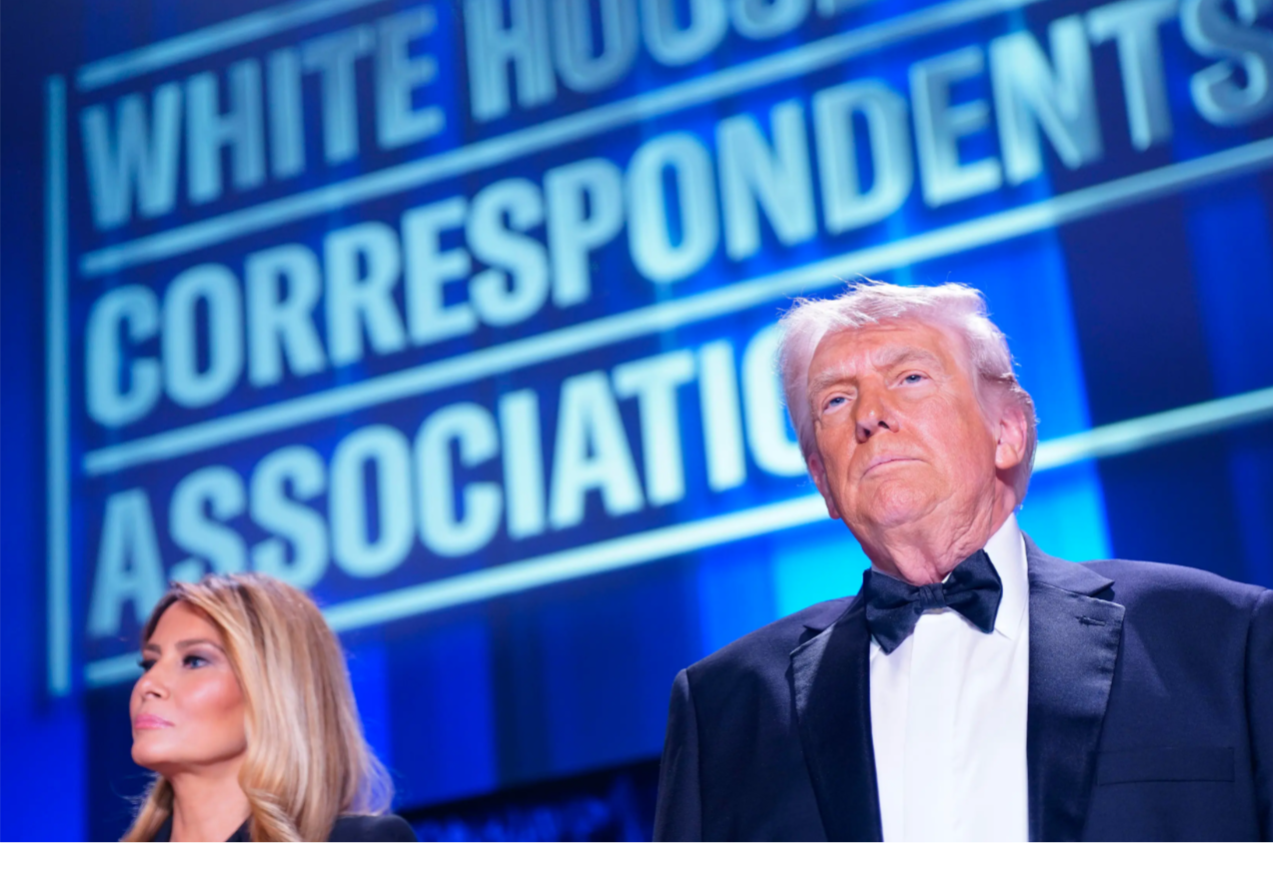
The White House Correspondents’ Dinner has traditionally been a place where politics, media, and power gather in one room. It is usually filled with jokes, cameras, speeches, and staged smiles. For panic to break out in that kind of setting shows how fragile normalcy can be. One moment people are eating dinner. The next moment they are ducking under tables, searching faces, and wondering if history is about to change.
That kind of shift leaves a mark on a nation.
For years now, America has been living inside a storm of political hostility. Social media sharpened every disagreement. Cable news monetized outrage. Campaigns discovered that fear can energize voters faster than hope. The result is a country where too many people speak of rivals like enemies instead of fellow citizens. Once politics becomes war in the mind, unstable people may decide violence is justified.
That is where the true danger begins.
Trump is one of the most polarizing figures in modern American life. To supporters, he is a fighter who challenged institutions that many felt ignored everyday people. To critics, he represents division, ego, and chaos. That level of emotional reaction means he draws devotion and resentment in equal measure. Any leader who creates that kind of energy must move through a world where emotions run hot.
And hot emotions can produce reckless acts.
The presidency was never meant to be an easy job, but it was also never meant to become a battlefield where every appearance feels like a security drill. The United States has a painful history in this area. Presidents have been assassinated. Others have faced attempts on their lives. Public officials across levels of government have dealt with threats. Each time it happens, the country says it must do better. Yet the anger machine keeps turning.
The Secret Service carries an enormous burden in moments like this. They are expected to read danger before danger fully appears. They must react in seconds, protect not only the president but also family members, staff, and civilians nearby, and then coordinate with federal and local agencies. Most people only notice them when something goes wrong. But when chaos breaks loose, their discipline can be the difference between panic and tragedy.
When witnesses say agents shielded the president and moved quickly, that is exactly what the public should want to hear.
Still, the deeper question remains: why does this keep happening around public life?
Some will ask whether foreign powers hate Trump enough to target him. The honest answer is that many governments have strong opinions about him, both positive and negative. Some leaders admire his blunt style and nationalist instincts. Others dislike his unpredictability, tariff threats, military rhetoric, or pressure campaigns. But when incidents happen on American soil, the first assumption should not jump overseas. Domestic radicalization has become a major concern in modern America.
Many violent actors are shaped less by foreign commands and more by online grievance, conspiracy obsession, isolation, or mental instability.
That reality should concern everyone.
The modern threat does not always wear a uniform or answer to a state. Sometimes it is one angry person with a weapon, a fantasy, and a desire for attention. Sometimes it is someone who believes politics has stolen their life. Sometimes it is someone who wants fame through destruction. These are harder threats to predict because they often emerge from private resentment rather than organized networks.
Trump, because of his celebrity and political footprint, becomes an especially visible target. Visibility brings applause and danger at the same time.
There is also the symbolic aspect. Attacking a president is, in the mind of some extremists, a way to attack the system itself. They may believe they are striking power, making a statement, or forcing change. In reality, such acts usually harden divisions, increase surveillance, deepen mistrust, and wound innocent people.
Violence rarely creates the better country its perpetrators imagine.
America now faces a crossroads that has appeared too many times. One road says this was just another wild night, something to joke about for a few days before moving on. The other road says enough is enough, and the political temperature must come down. History suggests the first road is easier. It requires no discipline. The second road demands maturity from leaders, media, and citizens alike.
That means politicians must stop treating every rival as evil incarnate. It means commentators must stop rewarding hysteria. It means voters must reject those who profit from endless rage.
Can that happen? It can, but only if enough people want peace more than performance.
Trump himself will likely respond in classic fashion: projecting strength, praising law enforcement, criticizing enemies, and framing survival as proof of resilience. That approach fits his political identity. He has long presented himself as a man who absorbs attacks and keeps moving. Supporters will see toughness. Opponents may see theater. But politically, moments of danger can sometimes strengthen leaders by creating sympathy and reminding the public that officeholders are human beings under extraordinary pressure.
The image of a president being rushed away often carries emotional force.
Melania Trump being present also adds another layer. Families of presidents live with risks they never fully chose. Spouses, children, and relatives become part of the security world whether they sought fame or not. Behind every headline is a family forced to process fear in real time.
That is one of the least discussed costs of public power.
The media will also face questions. The Correspondents’ Dinner symbolizes a sometimes tense relationship between presidents and press institutions. Yet in a moment of threat, those differences should become secondary. Reporters, staffers, guests, and officials all become civilians sharing the same uncertain room. Danger has a way of reminding people that labels matter less than human life.
Some critics may try to exploit the event for quick partisan gain. That would be a mistake. When physical threats enter democratic life, the proper response is seriousness. There is plenty of time for policy fights later.
What comes next for America depends on whether leaders learn anything.
Security around public events will almost certainly tighten. Screenings may expand. Access may narrow. Movement patterns may change. Intelligence reviews will follow. There may be renewed calls to monitor extremist rhetoric and online threats more aggressively. Civil liberties debates may return. Every security failure or near failure tends to create a policy ripple.
Yet stronger security alone cannot fix a broken civic culture.
The bigger challenge is emotional and moral. Too many Americans have been trained to see politics as entertainment mixed with revenge. That mindset erodes empathy. When people cheer humiliation, celebrate threats, or joke about harm, they help create an atmosphere where someone unstable feels validated.
Words do not pull triggers, but culture can lower barriers.
There is another truth worth saying plainly. You do not have to support Trump to oppose violence against him. You do not have to vote for him to understand that an attack on a president harms the republic. Mature citizenship requires separating political disagreement from acceptance of harm.
That principle protects everyone, not just one side.
If a president can be threatened at a high profile event in the nation’s capital, then governors, mayors, judges, lawmakers, journalists, and ordinary citizens can feel the tremors too. Fear spreads outward. People become hesitant to appear in public, speak freely, or participate in civic life. Democracy weakens when intimidation becomes normal.
America cannot afford normalization.
The country has survived wars, assassinations, riots, scandals, and bitter elections. It can survive this era too. But survival should not be the only goal. Renewal should be the aim. A healthier nation would argue hard while keeping humanity intact. It would defend ballots over bullets, persuasion over panic, and institutions over impulses.
That sounds simple, but in this climate it is revolutionary.
As investigations continue, facts will matter. Rumors should be rejected. False claims can cause fresh damage during uncertain hours. Let law enforcement establish what happened, who was involved, motive if any, and whether others were connected. Responsible patience is wiser than instant certainty.
Too many people now confuse speed with truth.
For Trump, the event becomes another chapter in a life already filled with extraordinary moments. For supporters, it may reinforce loyalty. For opponents, it may create a pause for reflection. For the nation, it should be a mirror.
What do we see when we look into it?
Do we see a confident republic capable of disagreement without destruction? Or do we see a culture so overheated that public life feels dangerous for everyone involved?
That answer will not be decided by one suspect in custody. It will be decided by millions of citizens, by the tone set from podiums, by choices made online, and by whether people remember that politics is supposed to serve life, not consume it.
Tonight, one reported incident shook a room. If America is wise, it will let the lesson shake the nation in a better direction.
Staff Writer; L.L. McKenna
Politics explained through the lens of justice and equity. Offering perspective that informs, challenges, and empowers.
One can contact this brother at; LLMcKenna@ThyBlackMan.com.
