
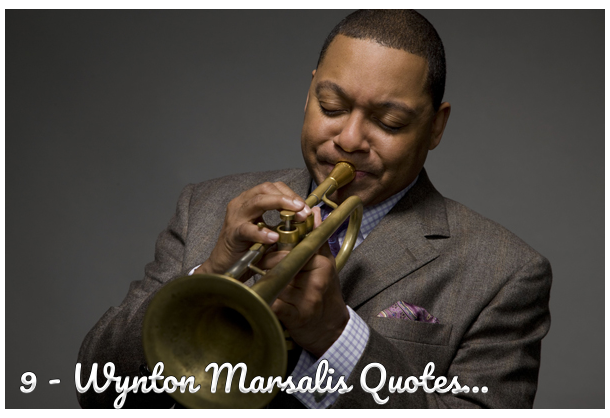
(ThyBlackMan.com) As this reflection is written, Wynton Marsalis stands at a rare threshold in American cultural life. After nearly forty years, he is preparing to step down as founder and artistic director of Jazz at Lincoln Center, the institution he helped build into a permanent home for jazz inside one of the nation’s most prestigious cultural spaces. A two year transition period has been announced, signaling not a retreat but the closing of a chapter that fundamentally reshaped how jazz is respected, taught, and preserved in this country.
Marsalis did more than elevate jazz into Lincoln Center. He forced a long overdue recognition of Afro-American culture as central to the American story rather than peripheral to it. Since establishing Jazz at Lincoln Center in 1987, his mission has remained disciplined and unapologetic. He set out to build an enduring institution that could educate and entertain while exposing generations to an art form too often misunderstood or treated as nostalgia instead of living history.
His public words have never been casual commentary. They carry the weight of lineage, struggle, and responsibility. They reflect a man who understands that culture does not survive on talent alone, but on standards, participation, and memory. As a Black man writing from within that inheritance, I hear in Marsalis not just critique but stewardship. The following quotes are not sound bites. They are signposts that still speak directly to our present moment.
1. The young very seldom lead anything in our country today. It’s been quite some time since a younger generation pushed an older one to a higher standard.
This observation cuts against one of America’s favorite myths. We often celebrate youth as the engine of progress, but Marsalis reminds us that visibility is not the same as leadership. Influence without responsibility does not move societies forward. From his vantage point, leadership has become confused with popularity, and urgency has replaced discipline. That shift has consequences that ripple far beyond politics into culture, education, and public life.
What Marsalis is naming is not a failure of energy but a failure of formation. Leadership once required a period of grounding, of learning how institutions actually function before attempting to reshape them. Today, speed is rewarded more than depth, and reaction often substitutes for reflection. When urgency is not paired with preparation, movements burn brightly and fade quickly, leaving little behind except noise.
When generational change has truly mattered, younger people did not simply oppose older ones. They challenged them by embodying higher expectations. They demanded rigor in thought, coherence in values, and consistency between belief and behavior. That pressure forced elders either to rise or to be exposed. Marsalis is not dismissing young people. He is insisting that seriousness, not age, is what earns authority.
As a Black man watching contemporary culture, I recognize this tension intimately. Young voices are everywhere, yet accountability often feels scarce. Too often, critique is loud while responsibility is deferred. Marsalis is asking a deeper question about standards. Who is raising the bar rather than merely rejecting the past. Who is willing to master something before claiming authority over it. His concern is not generational turnover but generational readiness.
This reflection resonates today because it calls for humility as a prerequisite for leadership. It insists that real generational change requires more than rebellion or disruption. It requires preparation, patience, and an understanding that elders are not obstacles by default but repositories of hard lessons that must be wrestled with, tested, and sometimes surpassed through discipline rather than dismissal.
2. There really have only ever been a few people in each generation who step out, are willing to put themselves on the line, and risk everything for their beliefs.
Marsalis strips away romantic illusions about social change. Progress has never been a mass movement of heroes marching in unison. It has always been driven by a small number of individuals willing to endure isolation, attack, and sacrifice while others watched cautiously from a distance. The benefits of courage are often shared broadly, but the cost is paid narrowly.
This truth unsettles because it exposes how selective our admiration can be. We celebrate bravery once it has been sanitized by time, once the danger has passed and the risk no longer threatens us. Marsalis reminds us that those who step forward are rarely rewarded when it matters most. They are questioned, caricatured, and dismissed long before they are acknowledged.
Within Black experience, this pattern is especially familiar. Those who challenged power structures often did so without institutional protection, financial security, or public sympathy. Their clarity made them targets rather than icons. Marsalis understands that courage is not an abstract virtue admired from afar. It is a lived cost that reshapes relationships, careers, and sometimes entire lives.
To risk everything is not poetic language. It means accepting that friendships may fracture, institutions may turn hostile, and reputations may never fully recover. Marsalis refuses to romanticize this reality. He names it plainly so that belief is not confused with comfort.
In an era where conviction is often performed online with little personal consequence, this reflection demands honesty. What are we actually willing to lose for what we claim to believe. What discomfort are we prepared to endure. Marsalis forces us to confront whether our convictions are ornamental, displayed for approval, or operational, capable of surviving pressure.
3. We always hear about the rights of democracy, but the major responsibility of it is participation.
This statement speaks directly to the quiet erosion of civic engagement. Marsalis reframes democracy not as a guarantee handed down by documents, but as a living practice that must be exercised to remain viable. Rights exist on paper, but they weaken when people disengage from the responsibilities that give them force. Democracy is not self sustaining.
Gains in democratic life have always depended on consistent involvement. Voting alone has never been enough. Communities had to meet regularly, challenge authority, build organizations, and hold one another accountable. Marsalis redirects attention from entitlement to obligation, reminding us that democracy asks something of us, not just for us.
As a Brother, this reflection carries particular weight. Participation has often been demanded of us without safety, fairness, or protection, yet withdrawal has never shielded us from harm either. Marsalis is not dismissing exhaustion or disillusionment. He is warning that disengagement carries its own cost and often cedes power to those least concerned with justice.
There is a temptation today to mistake cynicism for wisdom. To disengage is framed as clarity, as if refusal to participate proves insight. Marsalis challenges that posture directly. Cynicism does not protect democracy. It weakens it by leaving decisions in the hands of those who show up regardless of consequence.
Participation, as Marsalis frames it, is not blind faith in systems that have failed many. It is an insistence on agency. It is the refusal to become a spectator to decisions that shape daily life. Democracy survives only when people insist on shaping it, correcting it, and demanding better from it rather than watching its decline from a distance.
4. When you create change with your point of view, you have to be ready for what comes with that.
This reflection carries the weight of endurance. Marsalis understands that clarity is not neutral. Speaking honestly disrupts comfort, and comfort rarely yields quietly. There is no version of meaningful change that arrives without resistance, misunderstanding, or backlash.
Those who challenge dominant narratives are rarely welcomed. They are labeled divisive, extreme, ungrateful, or out of step. Marsalis does not frame this as tragedy or martyrdom. He presents it as the predictable response to disruption. Before one speaks, one must accept the reaction that follows.
In Black cultural life, this understanding has long been passed down. Words carry consequence. Influence attracts scrutiny. To speak publicly is to invite interpretation, distortion, and attack. Marsalis respects that power. He does not encourage recklessness or impulsive provocation. He encourages readiness, a sober awareness of the terrain one is entering.
What makes this reflection urgent now is the growing desire for the appearance of courage without its burden. Many want the symbolism of dissent without the cost it demands. Marsalis strips that illusion away. Change is not an aesthetic. It is an ordeal.
If your perspective unsettles established arrangements, you must be prepared to stand when resistance arrives. Marsalis is not discouraging expression. He is insisting on responsibility. If you choose to speak with clarity, you must also choose to endure what clarity provokes.
Wynton Marsalis leaves his formal role not as a relic but as a standard bearer. His words continue to demand seriousness in a time addicted to spectacle. They remind us that culture, like democracy, survives only when people choose responsibility over convenience and memory over amnesia.
