
(ThyBlackMan.com) When people ask what percent of Black men marry Black women, the question almost never exists in isolation. It is rarely just about curiosity or statistics. More often, it carries emotional weight shaped by personal experiences, online debates, cultural narratives, and long standing frustrations between Black men and Black women. As a Black man speaking from a relationship centered point of view, I believe this question deserves an answer rooted in truth, context, and respect for Black love as it actually exists, not as it is often portrayed.
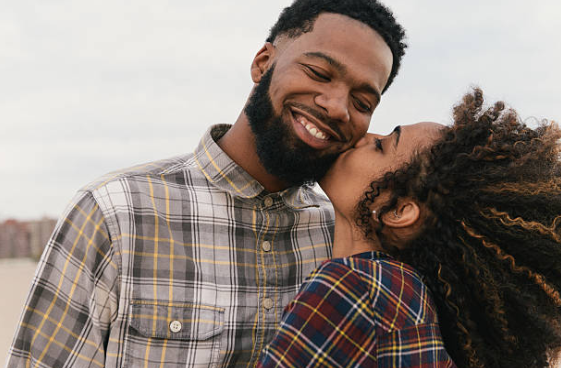
The statistical reality is far more grounded than the popular narrative suggests. Long term demographic data consistently shows that approximately eighty five to ninety percent of married Black men in the United States are married to Black women. This pattern has remained stable for decades and is supported by records from the United States Census Bureau and reinforced by academic research. Despite what social media, podcasts, or selective celebrity examples may imply, the overwhelming majority of Black men who marry choose Black women as their life partners.
That fact alone challenges one of the loudest myths surrounding Black relationships. There is a persistent belief that Black men are abandoning Black women or that marrying outside the race has become the norm. This belief is driven less by reality and more by visibility. Interracial relationships involving Black men are often amplified and framed as symbols of success or progress, while everyday Black marriages receive little attention. Stability does not trend. Quiet commitment does not go viral. As a result, millions of Black couples building lives together remain largely invisible in public discourse.
Another important distinction that often gets lost is the difference between marriage rates and marriage preferences. Black Americans marry at lower rates than some other groups, but this is not evidence of a lack of desire for marriage or commitment. Structural factors play a major role. Economic instability, housing costs, student loan debt, lack of generational wealth, and the long term effects of mass incarceration all influence when and whether marriage feels attainable. Many Black couples form deeply committed relationships for years without formal marriage because financial security and survival take priority over legal recognition.
This reality is often misinterpreted as avoidance or disinterest. In truth, it reflects pragmatism. When Black men do choose marriage, their preference for Black women demonstrates that the foundation of Black love has not eroded. It has simply been shaped by circumstances beyond individual control.
Black love has never existed without pressure. Historically, Black relationships were denied protection and repeatedly disrupted. During slavery, families were separated by force and marriage had no legal standing. After emancipation, discriminatory laws, racial violence, and economic exclusion continued to destabilize Black households. Even today, systemic inequality places disproportionate stress on Black relationships. Yet through every era, Black men and Black women have continued to choose one another.
That history matters because it informs present day relationships whether consciously acknowledged or not. Black couples often carry generational memory of survival, cooperation, and mutual dependence. Love, in this context, has never been purely romantic. It has always been practical, resilient, and deeply rooted in shared struggle. This shared history creates a depth of understanding that numbers alone cannot capture.
A Black man does not need to explain to a Black woman what it feels like to navigate the world under constant scrutiny. He does not need to justify why certain situations feel threatening or exhausting. Black women understand this instinctively because they experience their own version of racialized pressure every day. That shared awareness creates empathy, and empathy strengthens relationships over time.
Black women, in turn, often carry burdens that go unseen. They are expected to be strong without complaint, nurturing without rest, and resilient without recognition. Many Black men who marry Black women do so because they value a partner who understands their humanity while also having her own fully acknowledged. That mutual recognition builds trust and deepens emotional bonds.
Culture also plays a critical role in why Black men marry Black women. Culture extends far beyond music or food. It shapes how families gather, how elders are respected, how grief is processed, how humor is used to survive hardship, and how faith or spirituality is practiced. Black couples often share these cultural rhythms naturally. They do not need to explain why certain traditions matter or why community remains central to identity.
This shared cultural grounding often reduces friction in long term relationships. It allows couples to focus on growth rather than constant negotiation of background or values. Emotional safety becomes easier to maintain when both partners feel understood at a foundational level.
Despite these realities, media narratives frequently distort the picture. Conflict sells. Gender based arguments generate clicks and engagement. Healthy Black relationships are rarely highlighted because they do not provoke outrage. Over time, this imbalance creates the illusion that dysfunction defines Black love, when in reality stability is far more common than it appears.
This distortion has consequences. It fuels mistrust between Black men and Black women. It encourages defensiveness instead of dialogue. Younger generations absorb these messages and begin to question whether long term commitment within the community is realistic or desirable. These doubts are not born from lived experience, but from repeated exposure to negative framing.
It would be dishonest to deny that tension exists between Black men and Black women today. There are real conversations to be had about accountability, emotional availability, trauma, and expectations. Both sides carry pain shaped by personal and collective history. However, tension does not equal rejection. Disagreement does not erase love. The marriage statistics themselves show that despite challenges, Black men and Black women continue to choose one another.
From a Black male perspective, commitment is often misunderstood. Commitment is not weakness, submission, or loss of autonomy. It is intention. It is choosing partnership over ego. Loving a Black woman deeply requires presence, honesty, and emotional maturity. It requires listening without defensiveness and supporting without control.
Many Black men choose Black women because they want partners who see them fully rather than through stereotypes. They want relationships where vulnerability is not punished and strength is not mistaken for emotional absence. That desire reflects growth, not regression.
Black love also matters because of what it models for the future. Children raised in homes where healthy Black relationships are visible learn that love does not require self erasure. They learn that stability is possible even in an unstable world. In a society that often portrays Black families through a lens of dysfunction, these everyday examples quietly challenge those assumptions.
Marriage is not the sole measure of love or success, but committed relationships remain a powerful stabilizing force. When Black men and Black women build together, they pool emotional resources, wisdom, and resilience. They create homes that buffer against external hostility and offer spaces for healing.
What often goes unspoken is how intentional Black love must be today. Black men and Black women are not loving in a vacuum. They are navigating economic uncertainty, racial stress, mental health challenges, and constant commentary about what their relationships should look like. Choosing one another under these conditions is not passive. It is deliberate.
Many Black men who marry Black women do so after witnessing the sacrifices Black women have made for families and communities. They have seen Black women advocate for children, hold households together, and show up emotionally even when depleted. That awareness creates respect, and respect deepens love. Marriage, in that context, becomes less about status and more about shared responsibility.
Black women, in turn, often choose Black men because they understand the unseen weight Black men carry. They recognize the pressure to perform strength, suppress vulnerability, and absorb societal suspicion without complaint. Loving a Black man means creating space where he can be human, not just resilient. That mutual care strengthens bonds in ways that are rarely acknowledged publicly.
When Black men and Black women choose each other, they are often choosing familiarity over fantasy. They are choosing shared language over constant explanation. They are choosing growth over illusion. This choice may not always look glamorous, but it is grounded in trust, reality, and long term vision.
Black love has always been an act of resistance. Loving each other in a society that profits from division is powerful. Choosing partnership in a system that has historically undermined Black families is courageous. Every healthy Black marriage quietly pushes back against harmful narratives without needing to announce itself.
So when the question is asked what percent of Black men marry Black women, the answer is clear and grounded. The vast majority do. Roughly nine out of ten Black men who marry choose Black women. That reality reflects loyalty, shared culture, and emotional truth.
Black love today is not perfect, but it is persistent. It is evolving while remaining rooted in shared history. It is shaped by modern challenges, yet sustained by recognition and respect. As a Black man, I say this plainly. Loving Black women is not a trend or a statistic. It is partnership. It is legacy. It is home.
At the end of the day, the question of who Black men marry is really a question of who they trust with their lives, their future, and their legacy. The numbers confirm what lived experience already shows. Black men who marry overwhelmingly choose Black women. Not out of obligation, but out of understanding. Not out of habit, but out of connection. Black love continues because it is chosen with intention, nurtured through adversity, and rooted in shared truth.
Staff Writer; Jamar Jackson
This brother has a passion for sports, poetry and music. One may contact him at; JJackson@ThyBlackMan.com.
