(ThyBlackMan.com) The SAVE Act, a spinoff from the Denmark Groover playbook is highly reminiscent of a bygone era in political chicanery; indeed, it is a dangerous voter suppression bill. It would make it harder for Americans to register and stay registered—especially young, elderly, rural, and marginalized (minority) voters.
If passed, it would:
Require a passport or birth certificate just to register or update your information.
Ban most online and mail voter registration.
Purge voters from the rolls without notice.
Disenfranchise married women voters.
Every couple of years, it becomes apparent that another U.S. election is headed to a runoff. Most people have no idea who comes up with these rules. Even fewer understand why they were put in place. This is the story of Denmark Groover and the election law that was never about ensuring that the voting process was equitable.
In 1958, a Georgia politician named Denmark Groover was upset that he was defeated in his bid for re-election to the state House of Representatives. He had no criticisms of the way he ran his campaign or the positions he took. He was simply outraged that so many black voters chose to support his opponent.
He claimed that he lost because of a growing Negro voting bloc. Black voters in Georgia voted as a group and helped defeat him. To Groover, that was an issue that needed to be addressed, and he spent the next five years trying to address it.
The System That Came Before
Eventually, we’ll get to Groover’s fix, but it’s helpful to have a general understanding of the voting system in Georgia prior to 1963.
For decades, Georgia had used the county unit system. It’s a bit like the Electoral College, but different. Each of the 159 counties in Georgia got a certain number of “unit votes” based on their population. Small rural counties were given the same number of votes as large cities like Atlanta. This means that a vote in a small rural county had significantly greater impact than a vote in Atlanta.
It was a way to preserve power in the countryside for white voters. It worked exactly as it was intended until the U.S. Supreme Court in 1963 ruled it unconstitutional on grounds of “one person, one vote,” that votes must count equally for all citizens.
For Groover and his fellow segregationists, the losses were devastating. The old shield had fallen. Now they needed to acquire a new one in a hurry.
Groover’s Plan
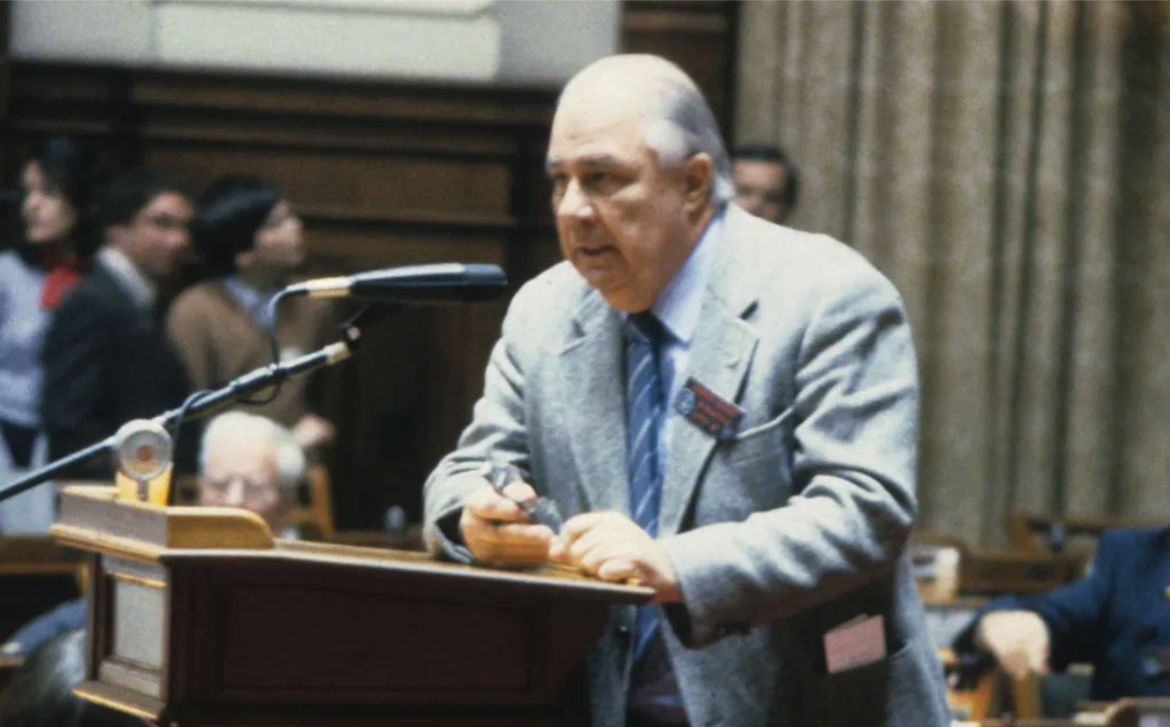
After being ousted as the House Speaker, Groover reappeared in the legislature in 1962. His mission was to curb the growing voting strength of African Americans. During a speech in the House of Georgia, he alerted fellow legislators to an impending danger in elections, arguing that unless there was a change in voting procedures, blacks would soon gain electoral control, and that was a threat. To counter this perceived threat, Groover urged his colleagues to implement voter registration requirements that would make it more difficult for minorities to vote.
Under the old plurality system, whoever gets the most votes wins, it’s pretty cut and dry. Groover’s idea was to change the threshold of votes to more than 50% to be deemed the victor. If no one is able to reach that benchmark, then the person with the most and second-most votes would advance to a runoff election.
In most elections in Georgia, several white candidates would run, and the white voters would fragment their votes over several candidates. This fragmentation allowed the Black-supported candidate to win the election, though black voters were fewer in number, but could unite behind a single candidate and push them to victory under the plurality system.
Groover’s runoff eliminated that possibility. If a black-supported candidate would have made it to the runoff, the strategy was to have white voters from each side of the partisan unite to vote for the white candidate. The odds were always with the majority. Groover himself articulated his purpose. He promoted his measure as a means to “prevent the Negro bloc vote from controlling the elections.”
It Became Law
In 1964, Georgia’s General Assembly passed a bill called the Groover runoff bill and it got signed into law by the governor. Tucked away in the bill as a preamble to the voting changes was a section calling for a literacy test. A test that had long been a device to keep Black people from being allowed to vote in the first place.
The runoff was introduced in primary elections. It was adopted for general elections following the contentious 1966 contest for governor. By then, Georgia had one of the more stringent majority vote requirements in the nation. It was the only state to require a runoff in every general election in which no candidate obtained a majority of more than 50 percent of the vote.
Louisiana would later implement a comparable system. But Georgia’s system is unique because the paper trail leads back to a man who, two decades after this compact was signed, would admit to what he had done.
His Own Words
Years after the fact, Groover would candidly testify in a legal deposition about his actions on election day. “I was a segregationist,” he said. “I was a county unit man. But if you want to find out whether I was racially prejudiced, I was. If you want to find out that some of my political activity was racially motivated, it was.”
That’s rare in the history of American politics. While most architects of voter suppression have never acknowledged the racial motivations behind their efforts, Groover did. And to his credit, he later changed his views on this issue too. Before he died in 2001, he came out in favor of revising the official state flag of Georgia, which has at its center the Confederate battle emblem — another symbol he came to regret promoting. At the age of seventy-eight, while in poor health, he went to the statehouse to ask the legislature to retire it.
But later changing your mind won’t change what the law did, nor does it change what the law is still doing today.
The Legacy Lives On
If it sounds like an old story, that is because it is an old story. However, what makes it new is the fact that a regulation created by Groover, concerning runoff election rules in Georgia, is still active and used in every state election when a candidate does not receive over 50% of the vote. It’s been noted by historians and political scientists that modern-era minorities are also impacted by the rules Groover set in motion — despite there being no written intent today, the negative effect of the rules remain present.
Turnout typically drops in runoff elections. Fewer people vote the second time around. And the voters who tend to sit out second rounds are often those who face the most barriers: people without easy access to transportation, people working two jobs, people with less of a tradition of voting because, for generations, they were actively kept from doing so.
Professor Morgan Kousser of the California Institute of Technology put it simply: when voting is racially polarized, majority-vote rules discriminate against whoever is in the minority.
A law or policy does not have to mention the word “race” in order to have a disparate impact on racial groups. That is what Denmark Groover sought to avoid. Now you will think of Denmark Groover every time you hear the term “runoff” — and the reason it exists.
Associate Editor; Stanley G. Buford
Feel free to connect with this brother via Twitter; Stanley G. and also facebook; http://www.facebook.com/sgbuford.
Also his email addy is; StanleyG@ThyBlackMan.com.
