
(ThyBlackMan.com) White backlash in America is nothing new. Neither is the need for Black America to have a hard-fought response to it. To “rise like a phoenix” has become a major part of the Black experience and legacy. The phrase comes from the mythical bird that is reborn from its own ashes, symbolizing Black resilience, survival, and continual rebirth in the face of oppression and systemic injustice.
It means to emerge more successful and wiser than before by turning periods of hardship and devastation into a means of powerful growth and purpose. Due to the dismantling of critical pathways essential to Black political power and prosperity, Generation X will eventually have to answer the alarm and “rise like a phoenix”. Future minority representation in Congress is in serious danger.
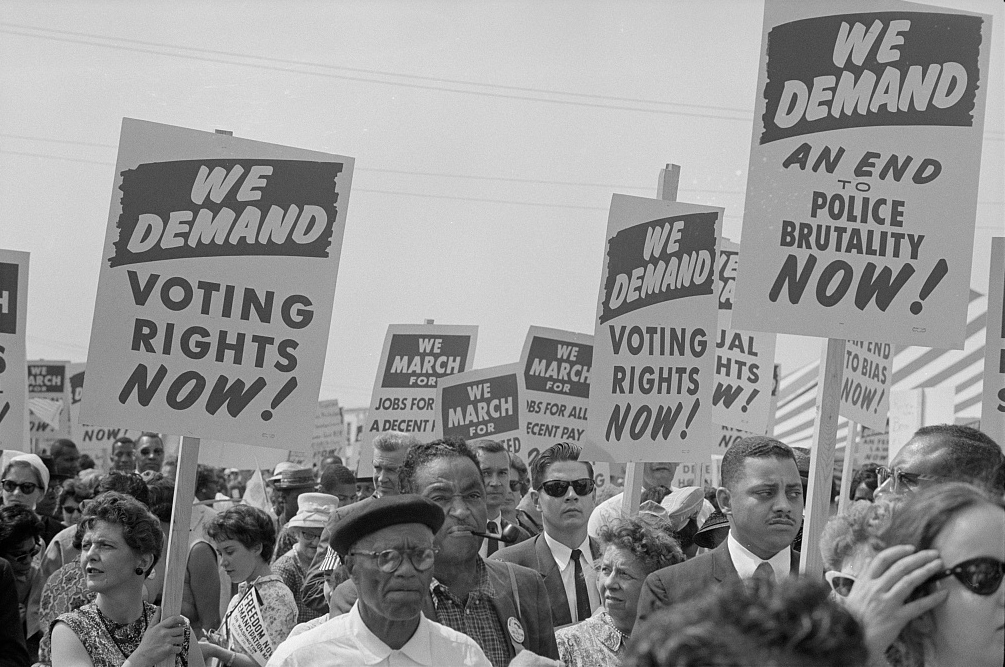
The Supreme Court’s pending decision in Louisiana v. Callais could be a devastating blow to the Voting Rights Act (VRA) by allowing states to redraw their congressional maps potentially eliminating as many as 19 majority-minority districts. These are districts, mostly throughout the South, where Black, Latino or Asian voters make up a majority of the population and can elect candidates of their choice. According to a report from Fair Fight Action and Black Voters Matter Fund, without Section 2, up to 30 percent of the Congressional Black Caucus and 11 percent of the Congressional Hispanic Caucus can be wiped out by Republican-controlled states. It is not isolated to the federal level, nearly 200 state legislative seats could be impacted.
The white backlash to Black political power is motivated by the conservative belief that white people have become the real victims of discrimination in America. Republicans have long argued that majority-minority districts violate the Constitution and benefit Democrats. Advocates are now warning that eliminating Section 2, Black representation will be “reduced to a very minor scale” similar to the collapse of Black representation after the Supreme Court gutted Reconstruction-era protections. After the loss of the Section 5 preclearance, Section 2 is the main nationwide protection against racial discrimination in voting and redistricting. It was designed as a post-Jim Crow “second line of defense” against vote dilution once barriers like literacy tests were outlawed.
Research shows that members of color are more likely to sponsor and champion legislation that will address the interest of minority individuals and communities. Therefore, a major reduction in the number of minority lawmakers will weaken policy advocacy on civil rights, policing, voting rights, economic inequality, health disparities and immigration. Less members would mean weaker institutional clout for the Congressional Black Caucus.
Rep. Jim Clyburn represents South Carolina 6th Congressional District which is the state’s only majority Black district, and its lone Democratic seat. Clyburn is vulnerable and is being targeted by embolden Republicans in his state including the candidate for governor. The pathway for Black political power and influence was meant to be protected by the VRA at full strength. As the clock is being turned back by the conservative movement, how did Black America go from George Henry White to the establishment of the Voting Rights Act, and now heading back to the pre-Jim Crow era?
George Henry White, who was born a slave in North Carolina, is widely recognized as the last Black lawmaker to serve in the U.S. Congress before the onset of the Jim Crow era. His term ended on March 3, 1901, largely due to the passage of legislation that disenfranchised Black voters in the South. After his departure, there were no African American members of Congress for 28 years, and none from a southern state for the next 72 years.
It wasn’t until 1992 (91 years later) that a Black person represented the state of North Carolina in Congress. In his farewell speech on the eve of his departure from congress, White said, “This, Mr. Chairman is perhaps the Negros’ temporary farewell to the American Congress; but let me say, Phoenix-like he will rise up some day and come again….”. White was correct in his prediction about the rebirth of Black political power, but it is very hard to accept the reality that Rep. Jim Clyburn could suffer the same fate as George Henry White.
Imagine it is 1901 and George Henry White and other Black candidates were free to run for elected office without having to contend with the systemic white backlash. Imagine it is 1921, and Black residents lived in the type of society where white Tulsans were not compelled by racial resentment to burn down and destroy the Greenwood district of their city. Imagine if the most prosperous Black community in the United States with over 10,000 residents, hundreds of Black-owned businesses, doctors, lawyers and homeowners was allowed to peacefully grow and thrive for generations.
Imagine if the section of Tulsa proudly referred to as the Black Wall Street turned its social and economic advancements into political power on the state and local levels. Where would the economic and political disparities be today in 2026, if the 1921 version of Black Wall Street was allowed to multiply in every state in the nation? The answer to that question is the reason why the Supreme Court is poised to strike down Section 2. If there is no longer the protection from Section 2 and 5 of the VRA, is the long-term damage still reversible? Will the next generation have it within them to “rise like a phoenix” if we don’t prepare them today?
Written by David W. Marshall
Official website; https://davidwmarshallauthor.com/
One may purchase his book, which is titled;
